
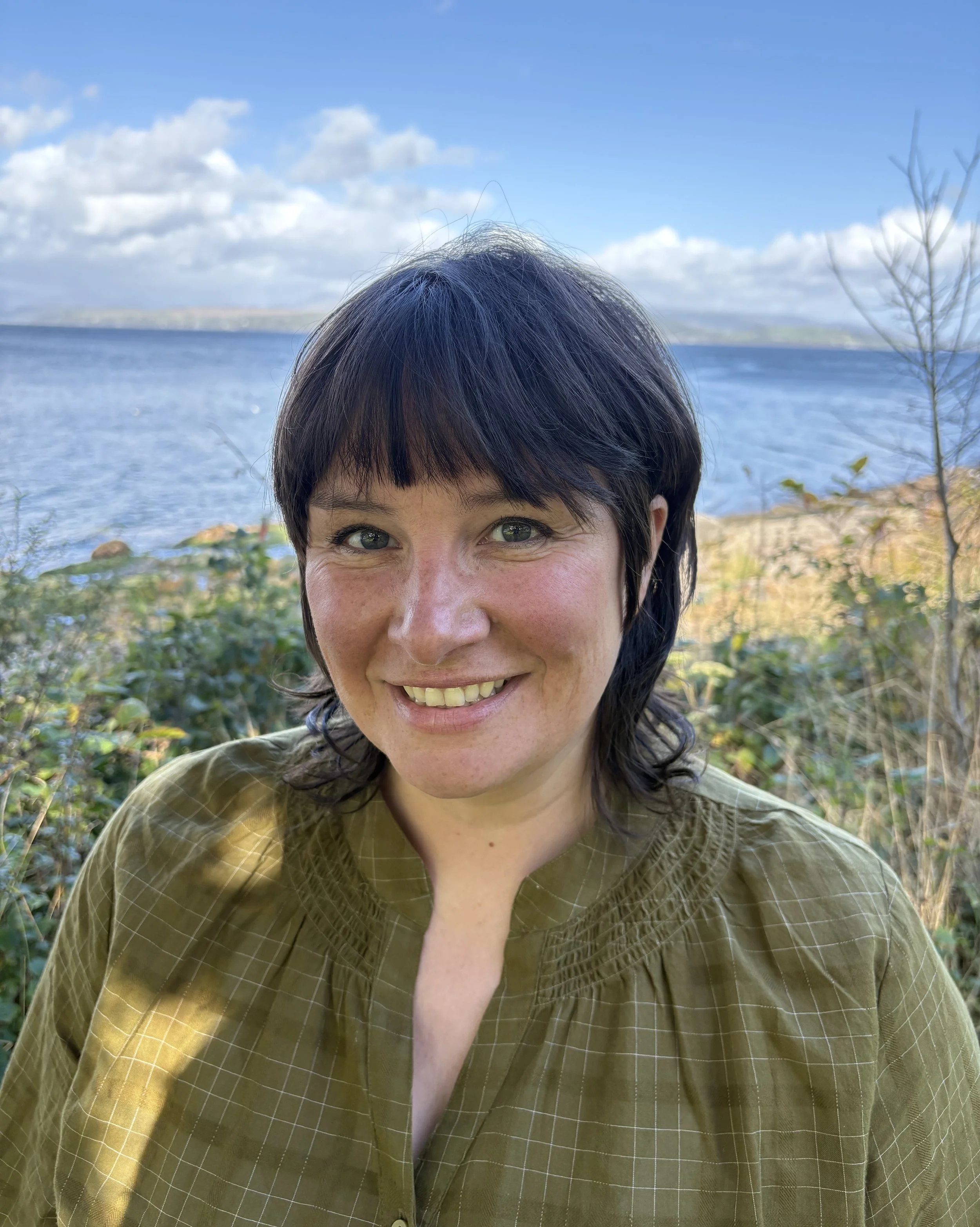
Hi, I’m Gayle
I’m a registered Counsellor with the British Association for Counsellors and Psychotherapists, and Reconnection Space is my practice.
The COVID pandemic prompted me to reflect on my relationship with my work and I came to realise that I wanted to work in more depth with people. This led to me becoming a Counsellor, and I’m now training to become a Psychotherapist.
Prior to working as a counsellor I worked with young people in the care system, health and social care service providers, multi-disciplinary teams, senior management teams, policy makers, academics and designers. My role for over twenty five years was as a social designer, qualitative researcher (Ph.D.) and consultant. I worked participativley with people to learn about their experiences so we could redesign services that better reflected the kind of care people wanted and needed. One of the honours of this work was to be able to listen to people, empathise, and explore ways people could connect with what they were looking for. It’s this experience I’ve woven into my one-to-one counselling work.
I’m also a Scot who lives in Scotland next to the River Clyde. I love being with nature and outdoors. I live not far from Glasgow, and with an art and design background, I enjoy the cultural scene in the city. Mixing the two together I’m interested in how our environments, cultures and generational lineages can shape our sense of self.
My Approach
Here are a few ways I approach counselling.
Our Mental Health
Our mental health is shaped by our thoughts, feelings and behaviours, but also by our experiences of the cultures, relationships, systems and environments that surround us; so it’s natural for our mental health to change.
I think we live in a society that is starting to value mental health more. I’d like to live in a society where we all visit a counsellor for our mental health in the same way we visit a doctor for our physical health.
I believe that while it may feel uncomfortable, it’s wise and courageous to engage with counselling and focus on something we may find confusing, difficult or painful.
Our Environments
Since the COVID pandemic, I think we’ve become more aware of how much the environments we live in, and the messages we receive, can affect our mental health.
While we don’t always have control over the things we’re exposed to, we can learn to understand their impact and choose how we respond.
When things feel difficult it’s not because there’s something wrong with us, but because we’re responding to what we’ve experienced, and what’s happening around us.
Counselling
Historically humans lived in societies that offered regular opportunities that supported life’s stresses: communal storytelling, communal healing practises, time with elders and ancestors, and access to nature and rest.
I value these supports and I think of counselling as another way we can support ourselves, by working with someone who is trained to help us connect with and develop our capacities in relation to what we’re experiencing.